Tweet Folk promotes local

Tweet Folk promotes local

All the talk of Norfolk County this spring has been the phenomenon called “Tweet Folk Tours”, a gathering of local residents, business people and others who meet face to face in one place for the evening and engage in a group Twitter chat.

Tweet Folk Tours event

At a recent Tweet Norfolk Tours event, a local restaurant put on a spectacular meal which was tweeted about by those in attendances. Photo: Ted Willey / Norfolk County Tourism

In January 2014, the Year of Social Media in Norfolk County was proclaimed at the municipality’s annual Economic Development Symposium. Social media guru Scott Stratten spoke to 175 local residents and business owners, extolling the opportunities and pitfalls of new technology.

The first Tweet Folk Tour (#twtfolks for short on Twitter) occurred on March 27, 2014 at the Blue Elephant Craft Brew House, involving a tour of the restaurant, networking, fellowship and learning.

The phenomenon gained momentum at Eat & Drink Norfolk, an annual local food and wine tasting event organized by the Norfolk County Fair & Horse Show in mid-April of each year. That was followed by a stop in late April at Kaley’s Kakes in downtown Simcoe, a beloved diner with great pastries. The group moved on to the Long Point Bird Observatory in early May, when images of colourful birds flashed across the twitter ‘verse.

Tweet Folks at Long Point Bird Observatory Norfolk County

Tweet Folks at Long Point Bird Observatory in Norfolk County. Photo: LPBO

The purpose of proclaiming 2014 as Norfolk County’s Year of Social Media is to encourage Norfolk County businesses, organizations and residents to participate actively in social media and other technologies in order to expand the capacity of citizens to become technologically proficient in an ever-changing world, to increase opportunities within our community, to encourage unity across Norfolk County and to grow community pride.

So far, Tweet Folk Tours is the shining example of  how the Norfolk County community has embraced new technology and built new relationships in the process.

The Tweet Folk Tours initiative is the brainchild of Gregg McLachlan, Mike McArthur and Amy Van Kessel, three local residents who are champions of social media.

The Tweet Folk Tours events welcome newcomers to social media so they can mingle with more experienced Twitter users and learn by watching, laughing and doing.

If you live in Norfolk County and you’re interested in getting involved, follow @TweetFolkTours on Twitter.

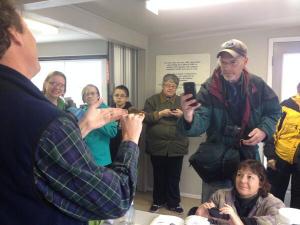
Here are some recent examples of conversations between attendees at a Tweet Folk Tours event in Port Rowan:

Tweet Folks at Blue Elephant

The first Tweet Folk Tours event at The Blue Elephant Restaurant and Craft Brew House in Norfolk County. Photo: Adam Leifl / MyFM

@DennisTravale: Group forming to enjoy the food, flavours & ambience of @NossaCasaBistro in downtown Port Rowan.#twtfolks #Ilovenorfolk

@suereformer: Learning something new @TweetFolkTours thanks@ted_willey #twtfolks

@KCCOCath: So neat to have so many “new” people in town and learning about our gem @NossaCasaBistro #PortRowan #twtfolks

@gailbouw: I have arrived and have been greeted by #twtfolks at@NossaCasaBistro they are giving us a #feas@DooneyRanch: This looks amazing! Ready to dig in with my#twtfolk family!

@KaleahMK: And to think, I used to get yelled at for texting at the table! #twtfolks #tweetandeat

Coral Reef: $142,000 per acre

Coral Reef: $142,000 per acre

A tropical island has valued its natural assets in a bid to retain a conservation-friendly tourist market.

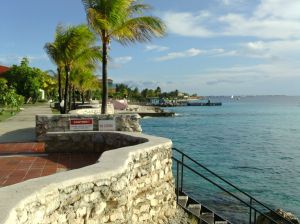
Under the blazing Caribbean sun basks an island no smaller than my own Ontario community. The island of Bonaire and the county of Norfolk share few other similarities. Yes, you can scuba dive in both places. No, not a lot of people have heard of either locale.

So when our dive club visited this Dutch island, it was surprising to see the installation of sewer pipes for the first time in history.

A new treatment plant worth US$35 million is starting to draw waste from resorts, businesses and homes along Bonaire’s coast and inland. Funds from the Netherlands are building a sewage system to European standards.

It seems the environmentalists of the island have miraculously joined forces with the developers to allow for new economic activity while protecting the precious coral reefs that attract millions in tourism revenue each year.

The case of Bonaire’s rebirth in an economic downturn may help the rest of us train our political masters to stop chasing smokestacks and “low hanging fruit”. Investing in infrastructure that supports food production and tourism while simultaneously improving our natural environment may be the better option.

In Bonaire, researchers put a price on conserving nature by gathering opinions from residents and tourists on the value of the land and sea around them.

Bonaire

It’s always 32 C in Bonaire

A Dutch professor, Dr. Dolf de Groot, led an international team to develop the financial value of ecosystems. Backed by a major European university, his team’s new database of natural assets pegged the annual financial contribution of a coral reef at US$142,000 per acre. By comparison, an acre of grassland was valued at US$1,100.

The project led to the expression of a total estimated value of nature in Bonaire as US$105 million per year. De Groot’s project estimated tourism spending in Bonaire at US$125 million annually, 80% of which comes from overnight tourists. Most of the “better spenders” are divers or people with a passion for protecting the marine environment. The remaining tourists arrive on cruise ships for a few hours then leave.

The team asked the lucrative overnight tourists if they would return to Bonaire should the coral reefs deteriorate. No surprise: about half said they would go somewhere else.

The research team went even further, asking hundreds of consumers to put a price on changes to the natural and built environment.

On average, individuals were willing to pay US$21 per month to improve coral reefs from poor to high quality. They were willing to pay US$8 per month to improve beach access by 50%. On Bonaire, grazing wild goats cause soil erosion resulting in pollutants entering the sea and spoiling coral reefs. Respondents were willing to pay US$15 per month to cull the wild goats.

Armed with this information, the researches deduced that “fees for using the nature on the island could be increased without negatively affecting the visitation rate in Bonaire”.

The study criticizes an assumption by politicians that cruise ships encourage repeat visitation. In fact, very few cruise ship passengers return to Bonaire to stay over for longer vacations. In a nutshell, cruise ship patrons admitted to researchers that they could care less if the island deteriorates. Dutch politicians are in love with the island, escaping their damp northern climate as often as possible to assess the situation down south.

Bonaire is not Norfolk County. Since tax regulations were changed by the Netherlands over the past 18 months, income taxes are set at a flat rate. businesses on Bonaire pay zero profit tax and 5% tax on dividends. The island is now one of the Caribbean’s major banking centers, alongside the Bahamas, Cayman Islands, Bermuda and Panama. Among them, these tax havens retain almost $2 trillion in US debt.

Even with that advantage, locals feel less represented, continue to complain that taxes are still too high and entrepreneurs are stifled. They have a point: the new tax regime collected 18% more revenue than the old one. Themandatory sewer hookups are perceived as a burden and the treatment plant is getting mixed reviews.

The lesson from Bonaire is not new: retaining an existing client base is less expensive than attracting a new one. Keep your current clients happy by investing in the quality and reliability of the product that they buy from you. For communities, improving the economic environment for local residents will come from actively improving the natural environment. Our customers in the tourism industry will reward us for it.

As a diver who enjoys Bonaire, you can bet I will return. Not just for a view of the Caribbean, but to explore the breathtaking wonderland of fish and coral below the surface.

……

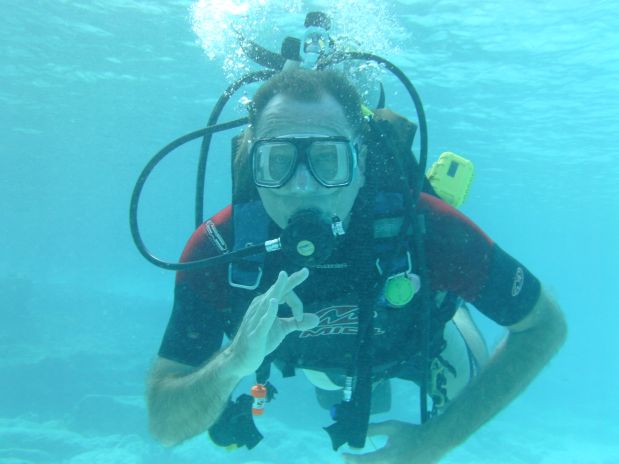
Photo (top): The author Clark Hoskin diving in Bonaire. This Caribbean island frequently receives critical acclaim as a worldwide diving destination by media such as Scuba Diving magazine. Photo by Tracy Haskett.

Clark Hoskin is Manager of Tourism and Economic Development for Norfolk County, home of Long Point Bay, where many Lake Erie shipwrecks can be found by divers. © 2012 Clark Hoskin

Getting your community noticed: Do your homework

Getting your community noticed: Do your homework

Clark Hoskin

Clark Hoskin

By Clark Hoskin

Article originally written for economicdevelopment.org:

At the 2014 annual conference organized by the Economic Developers’ Council of Ontario (EDCO), Norfolk County staff were asked to speak on a panel of communities about getting noticed in a crowded marketplace by highlighting our unique qualities.

Rather than delve into the detailed tactics used by Norfolk County to garner attention, we pondered some basic lessons learned over the course of ten years. At the EDCO presentation, three tips were presented.

1. Do your homework.

Sometimes, it is difficult to value the need for research when your world is turned upside down. Norfolk County encountered this challenge when it was presented with a threat to its primary agriculture crop.

About ten years ago, tobacco production in Norfolk County fell off a precipice. Marketed poundage of the Golden Leaf dropped from 158 million pounds in 1997 and bottomed out at about 14 million pounds in 2009. At the time, one local councilor bristled at the use of the phrase “demise of tobacco” in discussions. He was correct, in that tobacco is still grown here. However, our community is no longer defined by tobacco. The journey to that destination took a long time.

An economic development strategy developed just prior to those dark days pinpointed tourism as a potential alternative economic driver. There was pressure to do something, anything, to renew the economy of Norfolk County.

Turning desperation into action could have been disastrous, but luckily Norfolk County has many innovative, forward-thinking people willing to take risks. We established an agricultural networking team and discussed how to activate the strategy. The concept of a “Taste of Norfolk” event kept popping up, over and over.
flavourfestNot wishing to create a whole new event, we reached out to the organizers of the Norfolk County Fair & Horse Show, held every October since 1840. It is the fourth largest fair in Ontario and likely the largest – and most truly agricultural – fair in Canada. In 2004, a corner of one building was set aside for a new exhibit, Norfolk FlavourFest. Norfolk County farmers assembled at the Fair, created a marketplace for consumers to sample and buy their produce and food products. Fair organizers handled the cash, took a commission, and everyone was happy with the first year’s results: about $9,000 in sales of produce.

Remember: this happened in 2004 — a year before the term locavore was coined and two years before the 100 Mile Diet was published.

Norfolk County Cookbook

Norfolk County Cookbook designed by Tracy Haskett

The success of the exercise helped fuel the development of our popular map and local food guide and later, a recipe book. Everyone talked about Norfolk County being an agricultural powerhouse and, strangely, we were accustomed to hearing ourselves described as “the most diverse agricultural region in Canada”. Those words spell boredom to a tourist. The challenge was on to find unique characteristics about Norfolk County that would make it special to an urban audience of potential tourists.

2. Discover your edge.

Unfortunately, there was little detail in our files about what we grew other than reams of data about tobacco poundage and lists of seasons for fruits and vegetables. Norfolk County had the hunger for an edge, the intuition that we were an agricultural leader, and the need to know more.

We had no budget for research, but the internet provided free access to Statistic Canada’s data, including the Census of Agriculture.

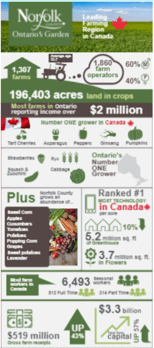
Homework led to our first discovery: Norfolk County grows more strawberries than anywhere else in Canada. This early epiphany intrigued us, so other crops were researched. Without any cost (except staff time – mainly spent after work) data also emerged to support Norfolk County’s status as the nation’s leading grower of sweet corn, peppers, ginseng, asparagus, pumpkin, cabbage, and tart cherries used for baking.

Energized by these results, more research was done. We discovered that Norfolk County is a leading grower of apples, raspberries, potatoes, tomatoes, blueberries and specialty vegetables in Ontario. Our hunch proved to be correct, and we have the numbers to prove it.
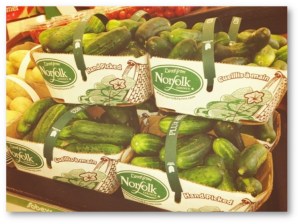
Norfolk County baskets

Norfolk County produce packaging

Kitchen table meetings with wholesale growers led to the use of the Norfolk County brand on produce baskets and boxes destined for grocery chains and the Ontario Food Terminal.

An agricultural marketing program was developed, including road signage, website (norfolkfarms.com), email newsletter, social media (facebook and twitter), radio ads, detailed farmer profiles, newspaper inserts, videos and more. Eventually, the Fair would launch a separate Eat & Drink Norfolk event every April.

Farmers and local food suppliers pooled funding with the County to support the program. Farmers too busy to represent Norfolk County at consumer events were glad to see the emergence of the Fairly Fat Guys, two local volunteers who enjoyed cooking and talking about Norfolk County farmers and food.
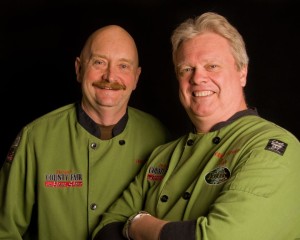
fairly-fat-guys-300x240

Norfolk County’s Original Local Food Ambassadors: The Fairly Fat Guys

As local wineries began to open, we adopted the new “Norfolk County: Ontario’s Garden” brand – a legitimate, authentic slogan that we could back up with numbers.

3. Reach out to stakeholders … and listen to their wisdom!

Doing our homework now meant checking in continuously with those who were wiser than us: the farmers and businesses that helped shaped the program. We made outreach a habit through monthly advisory board meetings, annual marketing plan focus groups, emails to partners, ongoing calls to individual businesses and farms, and our annual economic development symposium.

Norfolk FlavourFest won an award in 2007 from EDCO for Best Tourism Special Event / Campaign. By Year 9, the food marketplace portion was grossing over $50,000 in sales and, next door, the new Eat & Drink section featuring wineries, microbreweries and local restaurants was equalling those sales.

Norfolk County’s overall agricultural marketing campaign won an award of merit in 2008 from EDCO. Website visits to norfolkfarms.com continue to grow annually. Participation in the Norfolk County agriculture marketing program has increased from zero in 2003 to almost 100 in 2013. Many new businesses have established themselves in the area, including wineries, breweries, lavender farms, and restaurants catering to locavores.

Our community and its agricultural sector always possessed those unique attributes that we were able to turn into a successful marketing program. By doing our homework, discovering our edge, reaching out to our stakeholders and – most importantly – listening to their wisdom, Norfolk County, Ontario’s Garden, found a way to be heard in a crowded marketplace.

© 2014 Clark Hoskin

Time Goes By – A Sonnet

Time Goes By – A Sonnet

By Emma Shippey-Hoskin

Dad and Emma

How could time get away from us so fast?
Vanish behind the holy portrayal
Forever with the dead hand of the past.
Disease has parted us in betrayal,

If only it could have been prevented
And then we could have had more time to spend
As a grandchild and granddad contented.
I as the girl now at a bitter end,

Trying to reach but are always pulled back
By the thick rope of preposterous strife
And how much I miss those days I now lack.
I wish I could have seen your line of life,

So that I could forbid the end to come
Even when I know that you may succumb.

Sam and Angela #4

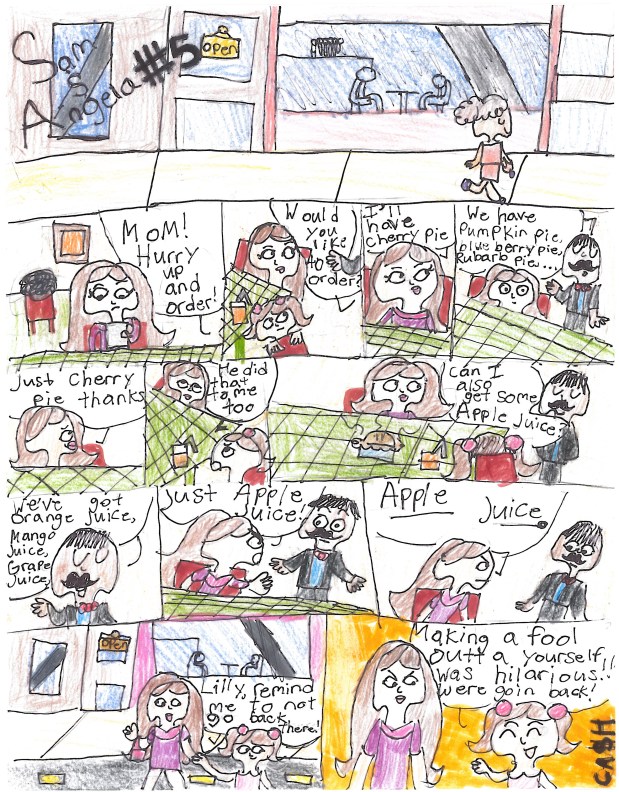
This is the latest installment of Sam & Angela by CA$H. ”When I was thinking about a comic strip to draw and write about I wanted to make it something people would tell their friends or share. First I was going to make it a comic strip about me and my life, but I quickly started to figure out that I wasn’t ready to do that kind of story. So I started to  think about two couples, and the crazy things that happen in their life!  When I started to draw them, I knew that my story was about to unfold. If you wanted to ask : ”Where do you get your great ideas?” Well, If you wanted to know, Its all in my head. If you ever want to be a writer like me, then get creative and let your imagination go crazy!!! My advice to you If you are a writer, draw! and never stop! Thanks and I hope you like my fourth installment of Sam and Angela! ”

– CA$H